
GOOD FIRE TRAINING NETWORK

We have 733100 guests and 408 members online

  • HOME
  • PRESCRIBED FIRE COURSE CATALOG
  • UPCOMING FIRE COURSE SCHEDULE
  • HOST A COURSE AT YOUR LOCATION
  • TRAINING CALENDAR
  • CONTACT US
Why Following NWCG Standards Matters When Completing Position Task Books
Featured

Why Following NWCG Standards Matters When Completing Position Task Books

Richard Carvalho Practitioner BLOG 22 October 2025
  • PRESCRIBED FIRE PRACTITIONER BLOG

The National Wildfire Coordinating Group (NWCG) sets nationally recognized standards for training, qualification, and wildfire operations across agencies. These standards aren’t just check-the-box paperwork — they ensure that every firefighter, from trainee to incident commander, operates safely, effectively, and consistently across jurisdictions.

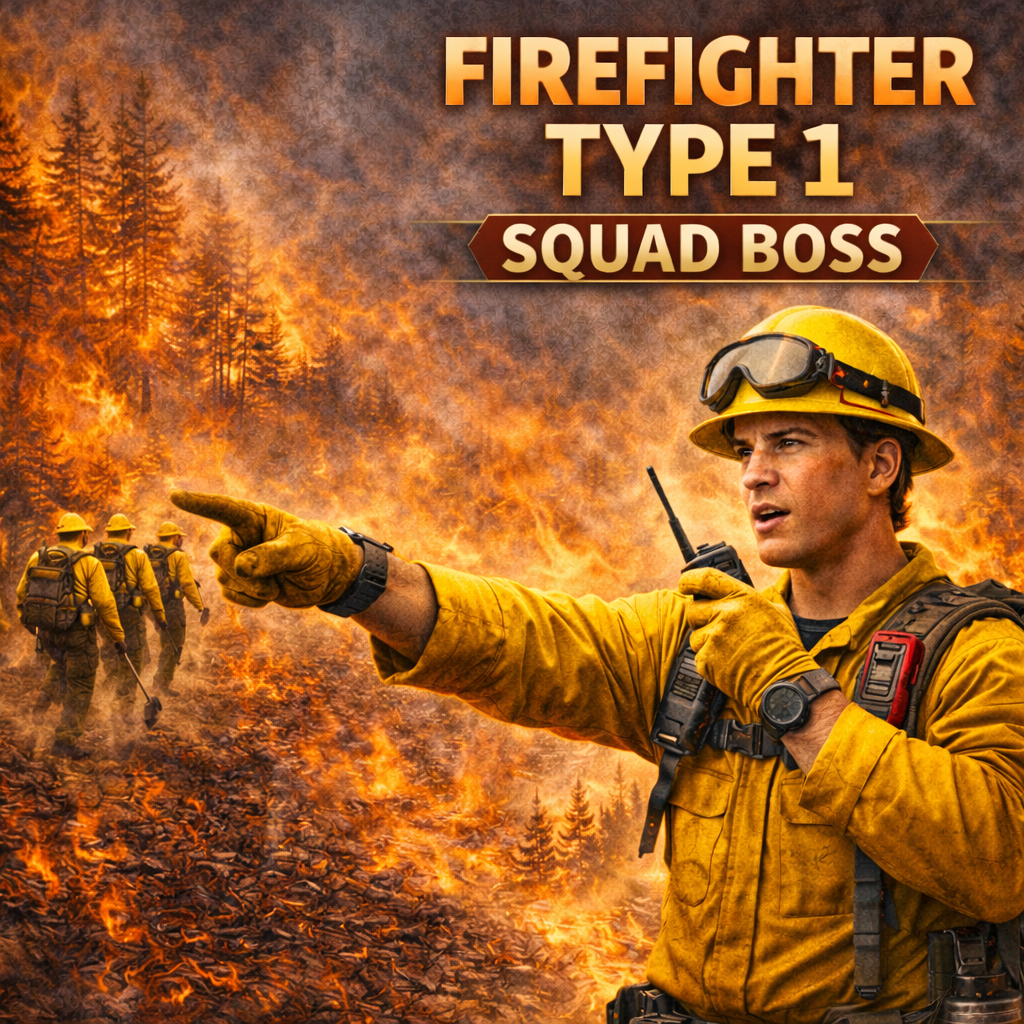
A core tool of that system is the Position Task Book (PTB), used to evaluate real-world performance in required skills for positions like Firefighter Type 1 (FFT1), Engine Boss (ENGB), or Burn Boss (RXB2). When signing off tasks, evaluators and trainees must follow NWCG standards exactly as written — not modified, simulated beyond reason, or replaced with unrelated technology.

Access the standard for Firefighter Type 1 (Squad Boss):

Incident Position Standards – PMS 350-14


Why This Matters

  • Safety: Standards exist because lives depend on consistent actions and decision-making under pressure.

  • Credibility & Certification: NWCG qualifications are recognized across the country. Cutting corners or artificially completing tasks makes those qualifications invalid.

  • Interagency Trust: When agencies accept firefighters on incidents, they assume their task books reflect real, validated skills — not improvisations.


Example: Drone Use Is Not a Substitute for Required FFT1 Tasks

In the FFT1 Position Task Book one required task is:

“Coordinate and provide feedback to aerial resources.”
How to accomplish this task includes:

  • Evaluate the need for aerial resources.

  • Ensure aerial resources have a dedicated ground contact and can communicate with them.

  • Identify flight hazards.

  • Finalize the location of the drop.

  • Describe the target location and explain the mission.

  • Communicate intentions to the pilot before the drop.

  • Provide honest, constructive, and timely feedback to aerial resources.
    Required resources: IRPG; radio; strobe; flagging; panel; signal mirror.

Using a drone instead of working with actual aerial resources (such as helicopters or SEATs) does not satisfy this task because:

  • A drone is not an aerial firefighting resource under typical NWCG aviation operations.

  • The task requires real-time communication with a pilot, coordinating a drop mission, hazard identification for manned aircraft — none of which are present with a small drone.

  • NWCG standards specify tools like radios, panels, mirrors — not drones.

  • Evaluating and providing feedback to an actual fixed-wing or rotor aircraft is a very different (and far more complex) task than flying a drone.

Signing the task book using a drone is inappropriate and non-compliant with NWCG standards.


Why Drones Are Rare in PBA Fires and What They Are Useful For

Today, drones (UAS) are used increasingly for reconnaissance, mapping, and situational awareness in wildland fire and prescribed fire settings. For example, the U.S. Forest Service reports UAS helping detect hotspots and mapping fire perimeters. US Forest Service+1

However, for most community-based Prescribed Burn Associations (PBAs), drones remain rare. Why?

  • High upfront cost: A firefighting-grade UAS system (with payload drop, thermal camera, heavy lift, etc.) can cost $40,000-$90,000 or more. GWD Bio-intelligence+1

  • Training & maintenance: Operating drones safely in wildland fire contexts requires trained pilots, maintenance, insurance, and regulatory compliance — all of which add cost and complexity.

  • Mission fit for small burns: Many PBA burns are relatively small scale and terrain/operations don’t justify the expense of drone equipment when traditional ground resources suffice.

  • Regulatory & safety issues: Flying drones near other aircraft, within incident airspace, or in smoke/ash environments adds additional risk and requires airspace coordination.

So while drones are powerful tools for certain operations (recon, mapping, remote ignition), they are seldom used in routine PBA burns — especially not as a substitute for the tasks defined in NWCG PTBs.


The Responsibility of Evaluators and Trainees

  • ✅ Use the exact resources and conditions referenced in the task book.

  • ✅ Only sign tasks that were fully and correctly completed.

  • ✅ Document real incident or prescribed fire experience — not hypothetical scenarios.

  • ✅ If a task cannot be completed realistically, wait for a proper assignment rather than improvised substitutes.


In Summary

NWCG task books are more than paperwork — they’re a contract of trust between the individual, the team, and the community. Following them precisely protects firefighters, ensures professional credibility, and preserves the integrity of the fire community. Whether you’re a trainee, evaluator, or supervisor, the standard is clear:

Do it right. Do it safely. Do it by the book.

Introducing S‑112: A New Era in Entry‑Level Chainsaw Training

Richard Carvalho Practitioner BLOG 27 July 2025
  • PRESCRIBED FIRE PRACTITIONER BLOG

Introducing S‑112: A New Era in Entry‑Level Chainsaw Training 🚧

What Is S‑112?

Effective April 30, 2025, NWCG officially added S‑112, Introduction to Chainsaw Operations, to its official training catalog and IQCS system National Interagency Fire Center+13iqcsweb.nwcg.gov+13The Healthy Forest Alliance Foundation+13. This new course is a blended learning course—consisting of:

  • ~4 hours online via the Wildland Fire Learning Portal

  • 1 day of classroom instruction

  • 2 days of hands‑on field training
    It’s specifically designed as the entry‑level chainsaw operations course, targeted at personnel seeking the Basic Faller (FAL 3) qualification National Wildfire Coordinating Group+13fs-prod-nwcg.s3.us-gov-west-1.amazonaws.com+13sbbchidaho.org+13.

This aligns with the updated PMS 310‑1 qualification standards, which stipulate that FAL 3 training will now require S‑112 (instead of the previous S‑212 requirement), starting the year after the new course is certified iqcsweb.nwcg.gov+7fs-prod-nwcg.s3.us-gov-west-1.amazonaws.com+7fs-prod-nwcg.s3.us-gov-west-1.amazonaws.com+7.


Why the Change? A Shift Toward a Tiered Sawyer Curriculum

Previously, NWCG offered a single chainsaw course—S‑212 Wildland Fire Chainsaws—for the Basic Faller (FAL 3) position. But following the Brian Hughes fatality corrective action and recommendations from the Hazard Tree and Tree Felling Subcommittee, NWCG decided to restructure chainsaw training into a three‑level system:

  • S‑112: Introduction to Chainsaw Operations (Basic Faller / FAL 3)

  • S‑212: Intermediate Faller (FAL 2)

  • S‑312: Advanced Faller (FAL 1)
    This framework improves training relevance, safety, and graduated complexity across qualification levels fs-prod-nwcg.s3.us-gov-west-1.amazonaws.com+8fs-prod-nwcg.s3.us-gov-west-1.amazonaws.com+8fs-prod-nwcg.s3.us-gov-west-1.amazonaws.com+8sbbchidaho.org.


What This Means for FAL 3 Certification

Training Requirement Revision

  • As of mid‑2025 and onward, individuals qualifying as Basic Faller (FAL 3) must complete S‑112, not S‑212, to meet NWCG certification standards.

  • S‑212 remains part of the path—but now required only for Intermediate Faller (FAL 2) and above National Wildfire Coordinating Group+13fs-prod-nwcg.s3.us-gov-west-1.amazonaws.com+13The Healthy Forest Alliance Foundation+13.

Alignment with the PMS 310‑1 Qualification Matrix

  • The NWCG PMS 310‑1 Standards for Wildland Fire Position Qualifications will be updated to reflect this shift, with S‑112 replacing S‑212 as the FAL 3 training prerequisite.

  • S‑212 and S‑312 will become benchmarks for higher-level chainsaw roles (FAL 2 and FAL 1 respectively) in the updated qualification matrix www-nwcg.fs2c.usda.gov+9fs-prod-nwcg.s3.us-gov-west-1.amazonaws.com+9National Interagency Fire Center+9.


Course Structure & Content

S‑112 offers foundational awareness and practical training for tasks typically performed by Basic Fallers:

  • Safety protocols, personal protective equipment (PPE), and human factors

  • Bucking, limbing, brushing, slashing, and simple directional felling

  • Risk management, situational awareness, and LCES (Lookouts, Communication, Escape Routes, Safety Zones)

This course is built to comply with the new national chainsaw standards (PMS 212, March 2025), which emphasize interagency consistency and OSHA compliance fs-prod-nwcg.s3.us-gov-west-1.amazonaws.com+1fs-prod-nwcg.s3.us-gov-west-1.amazonaws.com+1U.S. Fish and Wildlife Service+2sbbchidaho.org+2The Healthy Forest Alliance Foundation+2.


Timeline & Rollout

  • Beta testing: Conducted in Florida (February 2024) and California (June 2024)

  • Final course edits and certification complete by early 2025

  • Course added to official catalog and IQCS effective April 30, 2025 sbbchidaho.org+1U.S. Fish and Wildlife Service+1iqcsweb.nwcg.gov

  • The updated PMS 310‑1 training matrix, once released, will reflect S‑112 as the required course for FAL 3 qualification—likely in the 2026 PMS 310‑1 revision cycle.


What This Means for You

✅ New trainees pursuing Basic Faller (FAL 3) certification after Spring 2025 will enroll in S‑112.

✅ Current qualification holders who already completed S‑212 and have active FAL 3 certification are not required to retake a different course—but new entries to the qualification track will follow the new S‑112 route.

✅ Agencies and training providers should update training plans, PTBs (Position Task Books), and study resources to support the new, tiered curriculum.


Summary

  • S‑112 represents a tiered, foundational entry point into chainsaw operations for Basic Fallers (FAL 3).

  • S‑212 and S‑312 now correspond to higher-level faller roles (FAL 2 and FAL 1).

  • The shift enhances safety, clarity, and standardization across agencies, aligning training with PMS 212 national chainsaw standards.

  • The official catalog and IQCS system make S‑112 available as of April 30, 2025, and the updated PMS 310‑1 qualification guidance is expected to follow shortly thereafter The Healthy Forest Alliance Foundation+9iqcsweb.nwcg.gov+9fs-prod-nwcg.s3.us-gov-west-1.amazonaws.com+9fs-prod-nwcg.s3.us-gov-west-1.amazonaws.com+6fs-prod-nwcg.s3.us-gov-west-1.amazonaws.com+6National Wildfire Coordinating Group+6National Interagency Fire Center+1sbbchidaho.org+1fs-prod-nwcg.s3.us-gov-west-1.amazonaws.com.


Final Thoughts

This new structure helps aspiring sawyers and training managers navigate chainsaw certification in a more logical, safety-first way. For Basic Faller certification starting mid‑2025 and beyond, S‑112 will be your required credential. Intermediate and advanced fallers will progress to S‑212 and S‑312 as their skill level and responsibilities increase. Agencies should begin onboarding the new course materials and updating task books accordingly.


Fire Effects Monitoring for Prescribed Fire: Why It Matters and How It’s Done

Richard Carvalho Practitioner BLOG 12 February 2025

Fire Effects Monitoring for Prescribed Fire: Why It Matters and How It’s Done

Prescribed fire is a valuable tool for land management, but how do you know if your burn was successful? The answer lies in fire effects monitoring—a process that tracks the short- and long-term impacts of prescribed burns on vegetation, soil, and wildlife. By gathering data before, during, and after the fire, land managers can make informed decisions for future burns and ecosystem restoration efforts.


Why Fire Effects Monitoring is Important

🔥 Evaluates Burn Success – Did the fire meet the objectives (fuel reduction, habitat restoration, invasive species control)?
🔥 Improves Future Burns – Data helps refine burn plans and fire behavior predictions.
🔥 Assesses Environmental Impact – Tracks effects on plant regeneration, soil health, and wildlife.
🔥 Ensures Compliance – Helps meet regulatory requirements and scientific study needs.


1. Pre-Burn Monitoring: Establishing a Baseline

Before igniting a prescribed burn, it’s essential to establish baseline conditions to measure changes over time.

Key Pre-Burn Data to Collect:

✅ Vegetation Surveys – Identify plant species, density, and fuel loads.
✅ Fuel Moisture Levels – Measure dryness of vegetation, which affects fire intensity.
✅ Soil Conditions – Test for moisture, organic matter, and compaction.
✅ Wildlife Presence – Document species using the area before the burn.
✅ Photo Points – Take reference photos to compare post-burn changes.

Tools Used: GPS markers, soil probes, vegetation transects, fuel moisture meters, and aerial drone surveys.


2. Monitoring During the Burn

Tracking fire behavior in real time helps ensure burn objectives are met safely and effectively.

What to Monitor During a Burn:

🔥 Fire Intensity – Observe flame height, spread rate, and temperature.
🔥 Smoke Production & Dispersion – Assess air quality impacts and visibility concerns.
🔥 Burn Coverage – Record which areas burned completely, partially, or remained unburned.
🔥 Weather Conditions – Measure wind speed, temperature, humidity, and changes affecting fire behavior.

Tools Used: Infrared cameras, temperature sensors, weather stations, aerial drones, and on-the-ground field observations.


3. Post-Burn Monitoring: Assessing Fire Effects

After the fire is out, long-term monitoring helps track ecosystem recovery and evaluates if objectives were met.

Short-Term Post-Burn Assessments (Days to Weeks After Burn)

✅ Burn Severity Mapping – Classify areas as high, moderate, low, or unburned.
✅ Vegetation Response – Identify early sprouting and regrowth patterns.
✅ Soil Stability & Erosion – Check for ash deposition, hydrophobic soils, and runoff risk.
✅ Wildlife Movement – Monitor species return and habitat use.

Long-Term Monitoring (Months to Years After Burn)

🌿 Vegetation Recovery – Are native plants thriving? Are invasive species returning?
🔥 Fuel Accumulation – Is brush regrowth increasing future fire risk?
🐾 Wildlife Habitat Changes – Are key species benefiting from the fire?
🌎 Soil & Water Health – Has the fire improved nutrient cycling and watershed function?

Tools Used: Vegetation plot surveys, remote sensing (satellite and drones), repeat photography, and soil moisture testing.


4. Using Fire Effects Data to Improve Future Prescribed Burns

The information gathered from fire effects monitoring helps landowners and burn managers refine their strategies for future prescribed fires.

🔥 Adjust Burn Frequency – Should the area be burned more often or less frequently?
🔥 Modify Burn Timing – Would a different season provide better ecological benefits?
🔥 Change Fire Intensity – Should fire be applied at higher or lower temperatures for desired outcomes?
🔥 Adapt Fuel Management Strategies – Do more thinning, grazing, or pile burning need to be done before the next burn?


Let’s Monitor Your Fire Together!

Whether you're a landowner, conservationist, or prescribed fire practitioner, fire effects monitoring is essential to maximizing the benefits of controlled burns. If you need help tracking fire impacts on your property, our team of experts can assist with pre-burn assessments, real-time monitoring, and post-burn evaluations.

🔥 Contact us today to schedule a monitoring consultation! 🔥 Let’s work together to ensure your prescribed fire achieves its full potential.

Smoke Management Planning for Prescribed Fire: Ensuring Safety & Compliance

Richard Carvalho Practitioner BLOG 12 February 2025

Smoke Management Planning for Prescribed Fire: Ensuring Safety & Compliance

Prescribed fire is an essential land management tool, but smoke management is just as important as fire control. Without proper planning, smoke from a controlled burn can impact air quality, visibility, and public health. That’s why a well-developed smoke management plan (SMP) is critical.

If you’re a landowner considering a prescribed burn, our team provides professional smoke management services to ensure compliance with air quality regulations, minimize public impact, and keep your burn running smoothly.


Why Smoke Management Planning is Essential

🔥 Reduces air quality impacts – Ensures smoke disperses safely without harming nearby communities.
🔥 Maintains regulatory compliance – Meets state and local air quality requirements to avoid fines or shutdowns.
🔥 Protects public health – Minimizes smoke exposure risks for residents, schools, and healthcare facilities.
🔥 Enhances burn efficiency – A well-managed burn reduces excessive smoldering and improves fire outcomes.
🔥 Prevents road and aviation hazards – Avoids reduced visibility that can affect highways and airports.


Key Components of a Smoke Management Plan (SMP)

A smoke management plan is required for most prescribed burns and includes:

1. Smoke Dispersion Modeling

We use meteorological data and predictive models to forecast how smoke will travel based on:
✅ Wind direction and speed
✅ Atmospheric stability (how well the air mixes)
✅ Temperature and humidity
✅ Fuel type and burn intensity

2. Identifying Smoke-Sensitive Areas

We analyze the surrounding landscape to minimize smoke impacts on:
🏥 Hospitals and nursing homes
🏫 Schools and daycare centers
🏘 Residential communities
🚗 Highways and transportation routes
🛩 Airports and flight paths

3. Burn Timing & Meteorological Considerations

Choosing the right burn window is essential for proper smoke dispersion. We help determine:
🔥 The best season, day, and time for burning
🔥 Atmospheric conditions that promote smoke lift and dispersion
🔥 How to adjust ignition techniques to control smoke output

4. Permitting & Regulatory Compliance

We assist with all necessary permits and agency coordination, including:
✅ CAL FIRE & Local Air Quality Boards – Ensuring the burn follows state and county regulations
✅ Smoke Management Permits – Obtaining required approvals for legal compliance
✅ Public Notifications – Alerting nearby residents and businesses in advance

5. Smoke Monitoring During the Burn

To ensure smoke stays within acceptable limits, we provide:
📡 Real-time air quality monitoring to track smoke behavior
🛰 Satellite and drone imagery for large-scale smoke movement tracking
🚨 Adjustments to ignition patterns if unexpected conditions arise

6. Post-Burn Evaluations

After the fire, we conduct:
✅ Air quality impact assessments to determine compliance
✅ Smoke drift analysis to improve future burns
✅ Public reports if needed for regulatory agencies


How We Can Help: Our Smoke Management Services

We provide comprehensive smoke management solutions for landowners, conservation groups, and agencies conducting prescribed burns.

🔥 Custom Smoke Management Plans – Tailored to your land and burn objectives
🔥 Permit Assistance – Navigating air quality regulations and securing approvals
🔥 Real-Time Smoke Monitoring – Tracking smoke levels for safety and compliance
🔥 Burn Timing & Weather Analysis – Choosing the best conditions for minimal smoke impact
🔥 Public & Agency Coordination – Notifying communities and emergency services


Let’s Make Your Burn Safe & Compliant!

Managing smoke effectively is key to a successful, legal, and low-impact prescribed burn. Whether you need a full smoke management plan or just expert guidance, we’re here to help.

🔥 Contact us today to schedule a consultation and ensure your prescribed burn is safe, effective, and compliant with air quality regulations! 🔥

How to Get a Red Card in the World of Prescribed Fire

Richard Carvalho Practitioner BLOG 14 May 2024
  • PRESCRIBED FIRE PRACTITIONER BLOG

How to Get a Red Card When You’re Not Part of a Fire Agency

If you’re a landowner, volunteer, contractor, or aspiring fire practitioner, you might assume that getting a Red Card (Incident Qualification Card) is only possible through a fire department or government agency. Fortunately, that’s not the case.

The Healthy Forest Alliance Foundation provides a clear, legitimate pathway for individuals not affiliated with a fire agency to earn and maintain a Red Card—while staying compliant with NWCG standards.

Below is a step-by-step guide based on the process outlined on our website and used by hundreds of prescribed fire practitioners across California.


What Is a Red Card?

A Red Card is an official Incident Qualification Card (IQCS) that verifies you meet the training, experience, and fitness requirements for a specific wildland fire or prescribed fire position (such as FFT2, RXCM, FIRB, etc.).

Red Cards are required to:

  • Participate on prescribed burns

  • Assist with wildfire incidents

  • Work on NWCG Position Task Books

  • Operate under incident command safely and legally


Who This Process Is For

This pathway is designed for:

  • Prescribed fire practitioners

  • Private landowners and ranchers

  • Members of Prescribed Burn Associations (PBAs)

  • Forestry and fuels contractors

  • Volunteers and trainees

  • Non-agency firefighters

You do not need to be employed by CAL FIRE, the USFS, or a local fire department.


Step-by-Step: How to Get a Red Card Through Healthy Forest Alliance

1. Become a Fire Practitioner Member

To issue Red Cards, an organization must act as a qualified issuing unit. Healthy Forest Alliance Foundation fulfills this role for paid Fire Practitioner Members.

Membership gives you access to:

  • NWCG Task Book initiation

  • Training records management

  • Experience tracking

  • Incident Qualification Card issuance


2. Complete Required Training

You must complete the NWCG-required courses for your target position. For example, FFT2 typically requires:

  • S-130 Firefighter Training

  • S-190 Introduction to Wildland Fire Behavior

  • L-180 Human Factors

  • I-100 / ICS-100

Training certificates are uploaded to your My Training Documents area in the HFA member portal.


3. Gain Supervised Field Experience

Experience must be:

  • Documented on actual prescribed fires or wildfire incidents

  • Supervised by qualified personnel

  • Logged in the Fire Practitioner Experience Database

Healthy Forest Alliance events, partner PBAs, and approved projects all count toward experience.


4. Complete (If Required) a Position Task Book

Some positions require an NWCG Position Task Book (PTB). HFA can:

  • Initiate your task book

  • Assign qualified evaluators

  • Track progress and final certification


5. Meet the Fitness Requirement

Each Red Card position has a fitness level (Arduous, Moderate, or Light).

You must complete the appropriate Work Capacity Test (Pack Test) or approved equivalent and submit documentation.


6. Request Your Red Card

Once all requirements are met, you can request your Incident Qualification Card directly through the Healthy Forest Alliance member system.

HFA will:

  • Review your training, experience, and fitness

  • Verify compliance with NWCG standards

  • Issue your official Red Card

Cards are typically issued annually and must be maintained with refresher training and updated experience.


Why Use Healthy Forest Alliance?

Healthy Forest Alliance Foundation is a 501(c)(3) nonprofit dedicated to expanding access to prescribed fire training and qualifications—especially for people outside traditional agencies.

Through our programs, we:

  • Remove barriers to entry

  • Support community-based fire capacity

  • Maintain NWCG-compliant records and oversight

  • Help practitioners build legitimate fire careers

This system is widely used by PBAs, landowners, and emerging fire professionals across California.


Ready to Get Started?

If you’re serious about prescribed fire, wildfire response, or building qualifications outside an agency structure, this pathway is built for you.

Visit HealthyForestAlliance.org to:

  • Join as a Fire Practitioner

  • View training opportunities

  • Track experience

  • Request a Red Card

Good fire starts with qualified people—and everyone deserves a path to get there.

  1. Igniting Excellence: Certified Burn Boss Training & Mentorship Program
  • Course Cancellation Policy
  • Privacy Policy
  • Contact Us
  • Media Release
The Good Fire Training Network is a funded by the Healthy Forest Alliance Foundation Inc. a Nonprofit Corporation - CA - Public Benefit (6573681) Your donation supports our mission and is tax-deductible. Healthy Forest Alliance Foundation is a 501(c)(3) nonprofit recognized by the IRS. (EIN: 33-3363950).
Copyright © 2026 GOOD FIRE TRAINING NETWORK.
GOOD FIRE TRAINING NETWORK
  • HOME
  • PRESCRIBED FIRE COURSE CATALOG
  • UPCOMING FIRE COURSE SCHEDULE
  • HOST A COURSE AT YOUR LOCATION
  • TRAINING CALENDAR
  • CONTACT US
  • 530-287-8660
  • training@good-fire-training.org